Life insurance is a financial agreement between an individual and an insurance provider. The agreement states that the insurance provider will pay a designated amount of money, known as the death benefit, to the beneficiaries designated by the insured person. In exchange for that death benefit, the insured person agrees to pay a premium or fee (usually monthly) to be covered.
At its most basic level, the function of life insurance is to provide financial protection and assurance to people who rely on the insured individual's income. Specifically, that death benefit can be used for many purposes including:
- Funeral and end-of-life expenses
- Paying off outstanding debts, including a mortgage
- Providing for ongoing living expenses of family members/beneficiaries
- Providing for future obligations, such as a child’s education
- Replacing lost income, so that the beneficiaries can provide for ongoing expenses in the household
Including life insurance as part of your financial strategy is a proactive way to protect your loved ones’ future. Life insurance provides the financial support your loved ones will need to continue their lifestyle and goals even when you’re not around.
When considering life insurance, there are a range of coverage options to choose from, including term life, whole life, and universal life and they all serve a different purpose for your own life and finances, depending on your age, health, income, and future plans.
Properly selecting the most appropriate coverage isn’t just about protecting your own finances, it is about making a lasting commitment to the people who matter most.
Type of Life Insurance :
Term Life Insurance
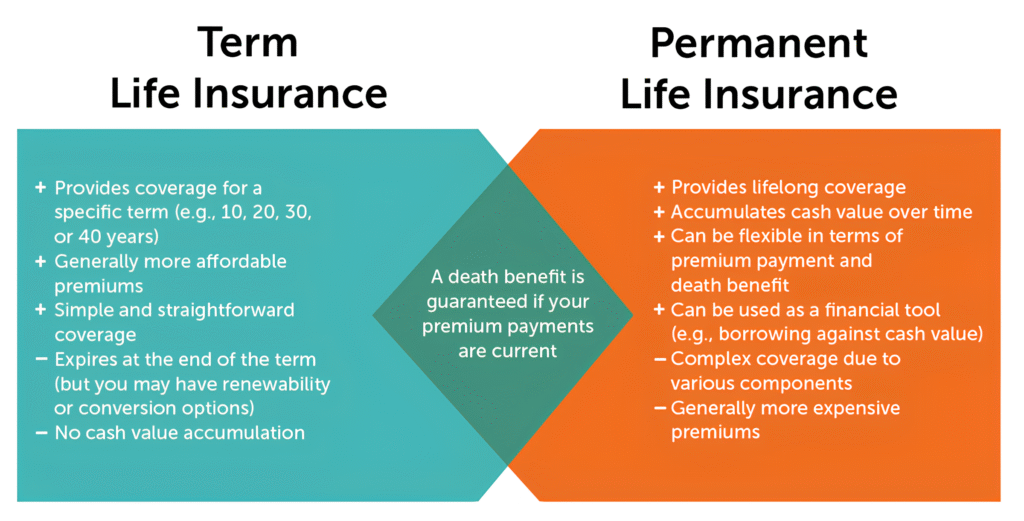
Term Life Insurance provides a guaranteed death benefit to the designated beneficiaries if the insured individual passes away during the specified term of the policy. Unlike Whole Life Insurance, Term Life does not accumulate cash value and is designed solely to offer affordable, temporary protection.Policies are available in fixed durations—commonly 10, 20, or 30 years—or in some cases, up to age 100. Premiums are typically level throughout the chosen term, making budgeting predictable and straightforward.At the end of the initial term, many policies offer the option to renew coverage for an additional period, often without requiring further medical underwriting—though premiums may increase based on age at renewal.A common and valuable feature of Term Life Insurance is the conversion option, which allows policyholders to transition their term coverage into a permanent plan—such as Whole Life or Universal Life—within a specified timeframe. This flexibility can be especially beneficial as financial needs and long-term goals evolve over time.Term Life Insurance is ideal for individuals seeking cost-effective coverage to protect their loved ones during key financial responsibilities, such as paying off a mortgage, funding education, or replacing lost income.
Permanent Life Insurance
Permanent life insurance is a long-term financial solution designed to offer lifelong protection and the opportunity to leave behind a meaningful financial legacy. In Canada, this type of insurance also provides valuable tax planning benefits that can help reduce the impact on your estate and enhance what you pass on to future generations.
Unlike term life insurance, which only provides coverage for a set number of years, permanent life insurance remains active for your entire life—as long as premiums are maintained. Many policies also include a built-in savings or investment feature, making them a practical tool for estate planning and long-term wealth management.
There are two primary types of permanent life insurance: Whole Life Insurance and Universal Life Insurance.
Whole life insurance offers guaranteed lifetime coverage with fixed premium payments that remain consistent for the life of the policy. In addition to the guaranteed death benefit, these policies often build cash value over time. This accumulated value grows on a tax-deferred basis and can be accessed through policy loans or withdrawals, providing a source of financial support when needed.
This type of insurance is a strong choice for individuals looking for reliable, lifelong protection paired with steady financial growth. It's particularly beneficial for those focused on building generational wealth, covering future obligations, or leaving behind a tax-efficient inheritance.
Universal life insurance is a more flexible form of permanent insurance. It combines lifelong coverage with an investment component that allows policyholders to grow the policy's value based on market rates or interest credited by the insurer.
What sets universal life insurance apart is its flexibility—you can adjust both the premiums and the death benefit over time, depending on your financial situation and objectives. This makes it an appealing choice for individuals whose needs may change due to income variations, family planning, or evolving investment goals.
Premium options can be tailored to suit different financial capacities, whether you're a young professional seeking to build wealth gradually or someone with a complex estate who needs a tailored financial planning tool.